Introducing Nonfiction into the Lives of Preschoolers
By Dawn Lttle, Links to Literacy, www.linkstoliteracy.com
Children are naturally curious, especially preschoolers. It is through curiosity that children learn. We can foster curiosity, and in turn help children learn, by encouraging and promoting it through nonfiction texts and activities. Here are a few ways to introduce nonfiction into the lives of your preschooler.
- Read Aloud Nonfiction Texts Anytime your preschooler shows an interest in a particular topic, provide nonfiction books on that topic. When you read informational texts aloud to your child (and you don’t have to read nonfiction from cover to cover!), you are building his/her background knowledge.
- Use Environmental Print Provide environmental print for pretend play. For example, if your child is pretending to be a waiter or work in a restaurant, have some take-out menus on hand for him to use. If your child is playing post office, provide him with some junk mail to sort. This can easily turn into a math activity as well. Kids can sort the mail by color or size. When your child turns your family room into a waiting room at the doctor or dentist office, provide magazines and newspapers for him.
- Introduce Text Features If your child has a particular question about a topic, use that time to discuss and show your child a few text features of nonfiction texts. Perhaps he wants to know what a specific dinosaur eats; demonstrate how you can use the table of contents or the index to try to locate the answer quickly, rather than reading through the whole book. If you come upon a word that you know your child will have difficulty understanding, demonstrate how to use a glossary. If there isn’t a glossary, explain to your child what the word means. Briefly, explain how we read differently for different purposes.
- Provide Hands-on Experiences A combination of texts and real-life or hands-on experiences is most powerful for learning. You can use this three-step process to incorporate nonfiction texts into your preschooler’s reading repertoire. Through these steps you will build your child’s background knowledge (essential to comprehending texts).
-
-
- Select a text based on a topic that interests your child.
- Hands-On/Read World – Prior to reading, provide an opportunity for your child to have a hands-on experience of some sort related to the topic. Utilize the outside world as much as possible (outdoors in general, museums, special exhibits, etc.)
- Read Aloud -Read aloud the text asking questions as you read. Provide explanations if you believe your child’s comprehension may be breaking down.
- Connect – Draw comparisons between the experience the child had and the text. How are they alike? How are they different? Help your child make connections.
-
- Create Discovery Baskets Discovery Baskets are made up of items related to a topic. Items that can provide a hands-on experience for a child, as well as texts related to that topic (you can use both fiction and nonfiction) are placed in a basket. Discovery Baskets are great to use if you want to build background knowledge prior to a new experience.
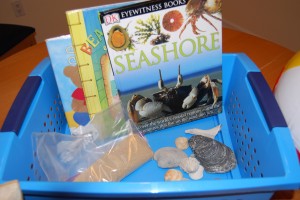
Example: Prior to making our annual beach trip, I wanted to build my kids’ background knowledge about the beach. Our Discovery Basket included: shells, a bag of sand, several books about shells, and a custom made inflatable beach ball. Our Hands-on Experience included feeling and discussing the different shells, counting the shells, and sorting the shells by size (another math lesson!). We put our hands in the bag and felt the sand. We discussed how it felt. We also created a craft. We bought an inexpensive wooden frame and then I hot glued the shells on to the frame. Although the frame could have been painted, my children chose not to paint the frame. We then had a frame for a picture from our trip. Then we moved on to reading about shells. Finally, we discussed how our shells were similar or different from the shells in the books. We used the beach ball to toss back and forth. The ball had comprehension statements to help us connect our background knowledge with our textbook knowledge. If I had a beach bucket large enough to fit hard cover books, I would have used that as our “basket.” 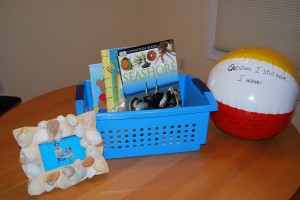
Reading nonfiction texts with preschoolers provides a natural connection to their own curiosities about the world. Having background knowledge about topics helps children comprehend what they read. By building upon the world knowledge of your preschooler now, you are setting a foundation that will only serve to guide them when they begin reading on their own.
Kids love to receive their own mail. Here are a few nonfiction magazine subscriptions that are fun to read with preschoolers:
Filled with bright colors and interactive stories
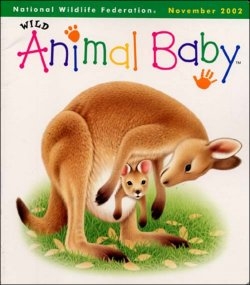
http://www.nwf.org/kids/kzPage.cfm?siteid=1

Filled with lively photographs and engaging stories to develop pre-reading skills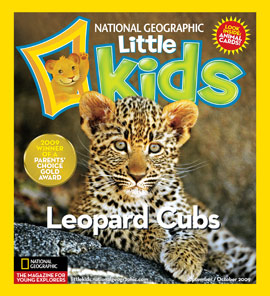
http://kidsblogs.nationalgeographic.com/littlekids/parents.html
Full-color photos and simple interactive text that prompts discussion and active learning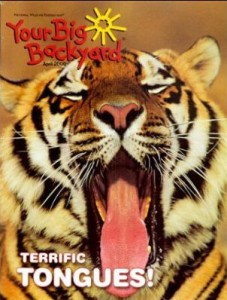


Cortney @ evanhaslanded says
Great ideas! It is so hard to teach the art of Non=fiction reading, especially to 5th graders (which I taught for many years). But starting early does make a big difference. I let my 2 y.o. pick what books he wants at the library, which one trip resulted in a tennis book, basketball book, baseball book, golf book and a football book. Can you tell what his interests are right now :-). But it was a GREAT opportunity to start non-fiction with him on his terms and he didn’t even know that I was “teaching” him a new skill!
Amanda says
We just upgraded Madison from Wild Animal Babies to Your Big Backyard! She LOVES when these magazines show up in the mail and spends hours pouring over them and asking lots of questions!
.-= Amanda´s last blog ..No more energy. =-.
Rebecca says
I love this! We get Chirp magazine for our 3 year old but we order Your Big Backyard for his older cousin.
Reading non-fiction is a wonderful thing. Right now, our favs are books about dinosaurs (real facts/pictures) and a child’s atlas/map book I got last year. He LOVES it.
Great post!
.-= Rebecca´s last blog ..Recipe: My yummy, easy Crock pot Chili =-.
PsychMamma says
Great post!! Animal Baby and Your Big Backyard are two of our favorites! J (3) is so excited every time they arrive in the mail! Will definitely check out the National Geographic mag too!
.-= PsychMamma´s last blog ..Embracing Holland =-.
Lynn says
Great post. I just realized you’ve dropped out of my google reader. Weird! Luckily I see your posts on Facebook. Off to resubscribe. Definitely going to look into those magazines.
.-= Lynn´s last blog ..Why I Support Banned Books Week =-.
admin says
Do you mind re subscribing Lynn? When I did my migration there were a few hiccups.
Renee Mosiman says
Another way to generate interest in nonfiction books, is to make a connection to a fiction book that they like. For example if the child likes the story, “The Little Engine That Could,” then you could get nonfiction books about trains. Or if your child really loves art or sports you could check biographies on famous artists or atheletes or nonfiction books on the topic.
Renee, author of
http://www.thesmarterpreschooler
LaToya says
We love Animal Baby, my oldest gets very excited when his magazine comes in the mail. We have a blast learning about the different animals each month.
Melissa Taylor says
My kids love non-fiction but I haven’t tried the discovery baskets – I will. Great idea!
Melissa
http://imaginationsoup.net
.-= Melissa Taylor´s last blog ..Heart Mapping =-.
Dawn Little says
Hi all! Thanks for the kind comments! I’m so glad you liked the post! Renee, great idea about pairing nonfiction and fiction.
Melissa — please tell me how the discovery baskets work out for you!
Thanks again, Allie, for this opportunity. Love your blog!
Dawn
Jen says
My daughters have always loved non-fiction- especially my youngest. I would actually try to encourage her to pick out fiction along with her stack of factual finds! I think it is great to expose them to all of the different genres.
I like the discovery basket- I did something similar when we were exploring Rock and Minerals.
Presently, the girls are enjoying a non-fiction book about Amelia Earhart. They keep asking me- is this true?
For older kids, The Magic Tree House Series is fictional, but contains many facts. Some of the books are actually paired with a non-fiction research guide.
Jen from Creative and Curious Kids!
.-= Jen´s last blog ..Love the Pumpkin Farm! =-.