Child development is a complex process, and as someone with a graduate degree in early childhood development, I can say that the more I learn about it, the more I realize there is to learn. We know so much about this, but we are always learning more, which is perhaps why I find it so fascinating to dive into new research and find ways to apply it to my teaching practice. One way I am refining my pedagogy is by more intentionally including lessons and opportunities for my PreK students to build social-emotional skills in my classroom. Before I list the 5 books and lessons that build social-emotional skills, I want to share with you today why we don’t take a little peek at the research that led me to make this a priority for my teaching practice. If you want to explore this topic in greater depth and get more than 5 new social-emotional learning lessons, you should check out my Everyday Social Emotional Learning virtual workshop.

Why are social-emotional skills so essential to teach at preschool?
Social-emotional development can’t happen on its own; it requires social interactions. Children need to interact with others to learn these skills. Additionally, research shows that we must intentionally teach and develop these skills; they don’t develop naturally. Take self-regulation, for example, research makes it very clear that its development is highly dependent on appropriate co-regulation. Children need warm, responsive adults to help model and coach them as they build these skills. Early childhood is one of two sensitive periods for social-emotional development in humans, with the other in adolescence. These periods are times of optimal learning and exponential growth; it’s the perfect time for us to spend intentionally supporting our students as they develop these skills.
What social-emotional skills should we focus on?
According to the Ruler Approach Framework developed by Yale’s Center for Emotional Intelligence, these five skills are essential for building emotional intelligence:
Recognizing emotions in oneself and others.
Understanding the causes and consequences of emotions.
Labeling emotions specifically.
Expressing emotions within cultural norms and social context.
Regulating emotions.
These are the social-emotional skills I am choosing to focus on in the lessons and activities I create and explore with my PreK students moving forward. However, these lessons and activities aren’t the bulk of my mission in supporting my students’ social-emotional development. That is my work as a co-regulator. The number one thing we should focus on is our interactions with our students, being warm and responsive, both emotionally and culturally. I can’t stress enough how important it is to model and coach our students throughout the day for their well-being and development. Learn more about this in my professional development workshop.
Still, we know we need to intentionally focus on teaching specific skills in lessons too – so let’s get back on track and let me share five books and lessons that build social-emotional skills!
5 Books & Lessons That Build Social Emotional Skills For PreK & Kindergarten
These five books and lessons that build social-emotional skills are ones I’ve used with multiple groups of PreK students, but I’ve never used them without tweaking them to fit each group. Every year, every group of 4 & and 5-year-olds I teach is unique and has unique needs. Always take lesson plans like these and change them as needed to best fit your class. For example, for many years I have done these lessons during whole-group time, but this year I am opting to do some during small-group time.
Circle Time Lesson: Recognizing Emotions in Oneself and Others.

Book: The Way I Feel
This book is so comprehensive, and the rhyming text makes it a fun read, too. The book covers many emotions, and I want to encourage you to choose a few to work on and repeat this lesson multiple times a year. Pick 4-5 emotions to read one time. As you read this book, try to match your body to the emotion you are reading about. Ask your students to do the same.
Activity: Simon Says Emotions
After reading the book review, the 4-5 emotions you read about, and if your group has the stanima, ask them about times they have felt these emotions. Next, get up and tell your group that you are going to play Simon Says, but it’s not regular Simon Says, it’s emotion Simon Says. The way it works is that “Simon” calls out simple situations that illicit emotional responses, and the players must show how they feel about them. For example: “Simon says show me how you feel if a friend says you can’t play with them.” or “Simon says show me how you feel if we get cake and ice cream for a snack today.”
There are no right or wrong responses; the game is all about tapping into feelings and other people’s reactions, too. After each situation, ask your students to notice other friends’ faces. Do we all feel the same way?
Circle Time Lesson: Understanding The Cause and Consequences of Emotions
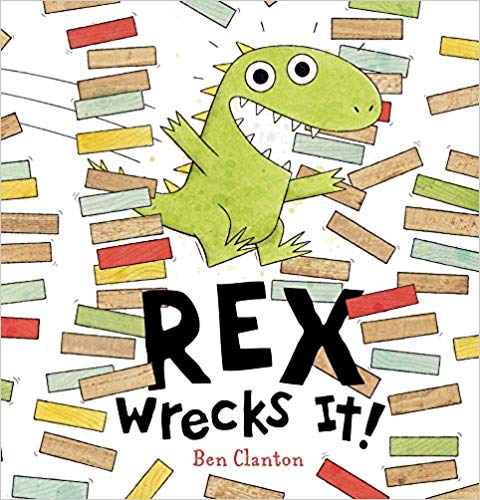
Book: Rex Wrecks It by Ben Clanton is a must-read for preschoolers. The story follows a little dinosaur who can’t resist knocking down other people’s tower creations. It effectively empathizes with children on all sides of this situation. While reading the book to your students, emphasize how it feels when a block tower gets knocked down, focusing on the characters’ emotions and reactions. This discussion will be helpful as you navigate tower-related incidents during free play throughout the year. Additionally, consider spending some time talking about the challenge of resisting the urge to knock down a tower when it’s right in front of you. Overall, the book provides an excellent exploration of self-regulation and the struggle to resist tempting actions that seem fun.
Activity: Graphing our feelings.
Supplies: Pocket Chart, name cards, and emotion cards.
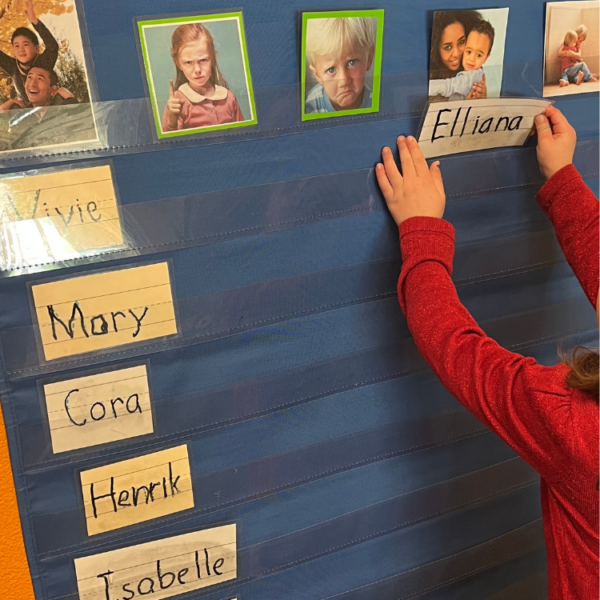
After reading the book, spend some time discussing how it feels when someone knocks over your block tower. Then, using name cards and laminated photos of people expressing different emotions (click here for a free printable), create a simple graph in your pocket chart with the emotion cards spread out in the top row. Review the emotions displayed: Happy, Angry, Sad, Frustrated, Disappointed, Surprised. Next, ask your students to select the emotion that best fits their feelings about this situation by placing their name card under that emotion. Discuss the results together.
Circle Time Lesson: Labelling Emotions Accurately

Book : The Feelings Book
This book offers a fun, bright look at different feelings. While I try to balance using actual photos of children expressing emotions with more fantastical illustrations, I find that for the read-aloud portion of a lesson, whether it is in a small group or a whole group, a more engaging book is the most crucial element, and this book does the trick! Todd Parr is magic at balancing teaching with fun and helps us teachers do that too!
Activity: Emotion Match Up
Supplies – emotion cards.
This game is one of my favorites to play with math cards, but I switched things up to play it with emotion cards, too. The premise is simple: each student gets a photo of a child expressing an emotion. The goal is to find the other child with a card showing a different child with the same emotion. When they find their match, they sit down together. Once every student has found their match and is sitting in a pair, the teacher asks each pair to say what emotion they had, and shows it to the whole group. Repeat as lng as your group can persist.
Circle Time Lesson: Expressing emotions appropriately
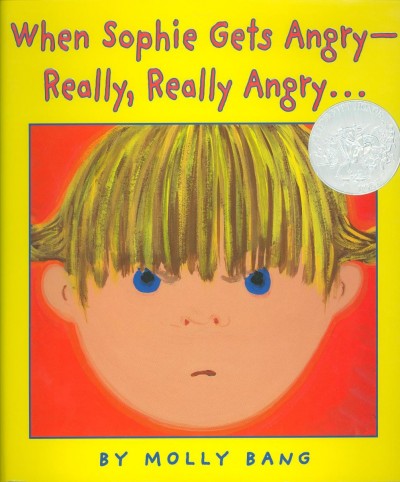
Book: When Sophie Gets Angry–Really, Really Angry… by Molly Bang is a book I bought in my first year of teaching, more than 20 years ago. I had a lot of anger issues in my classroom, and we spent a lot of time reading books about anger to diffuse it. Children love this book because they can relate to how Sophie is feeling. She is angry, doing something about it, and becoming calm. I think Sophie has great self-control; she knows she needs to go be alone for a bit to calm down, then rejoin the group. Sohie’s actions are exaggerated for effect, but really, this book is about learning how to stop raging, not about encouraging it. Kids LOVE it. They relate and love knowing that after you calm down, you can be welcomed back into the group.
Activity: What Should You Do When You Feel Angry?
Supplies: Whiteboard and marker for recording student responses.
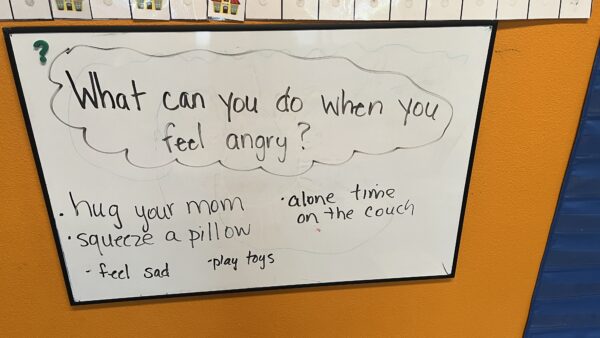
This is a simple activity, but it always amazes me how engaged even young 4-year-olds are with it. After reading the book, ask this question. What can we do when we feel angry? Should you run away like Sophie? Is that OK? No, it’s not what we should do when we feel angry. What can we do instead? Then record the responses.
Whole Group Lesson self-regulation
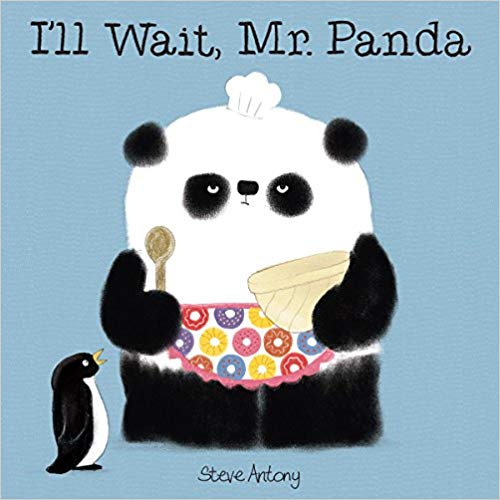
Book : I’ll Wait, Mr. Panda by Steve Antony is a delightful children’s book about the challenges of waiting. My students and I enjoyed reading it and discussing the importance of patience, especially in activities like baking. This book is perfect for circle time, as it features a male character in a traditionally female role, promoting positive representation. It also beautifully weaves in themes of trust alongside patience, offering valuable lessons for young readers.
Activity:Freeze Dance
Supplies something to play music on and easily pause.
Obviously, if you can bake with your students, that would be another great activity for this book, but when I bake with my students, they aren’t really waiting or working on self-regulation, because we are often playing and following our regular class routine while something is baking. Instead, play an active but very effective game for developing self-regulation, FREEZE DANCE!
Pop on some music and explain that when the music is on, it’s time to dance, but when it stops, they must stop and freeze too! As you play, take longer and longer pauses.
More Preschool Activities & Lessons That Build Social Emotional Skills
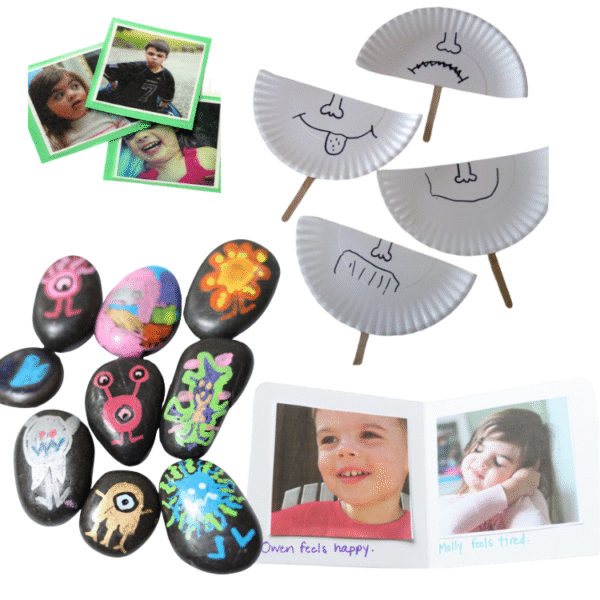
Circle Time Lesson About Men’s Emotions
Emotion Action Song
What Does Kindness Look Like?
DIY Emotion Book
Emotion Memory Game
Paper Plate Emotion Masks
Kindness Rocks
Worry Monsters

Leave a Comment