Not all PreK teachers are eager to let their students use the classroom whiteboard, especially if it’s a smartboard, but I don’t have anything that fancy or technical in my PreK classroom. I have a regular old little whiteboard, and my students are encouraged to use it. I think all PreK classes should have one to easily facilitate experience with writing and drawing on vertical surfaces, as it is well established that this is hugely beneficial to developing the muscles, coordination, and proper form for eventual handwriting. There is no need to force learning to write before children are interested at this age, but supporting their development means helping to build skills that will ease them into whatever comes next. I have gathered some of my favorite, well, really my PreK students’ favorite, whiteboard activities we explored during free choice.
Easy Vertical Writing & Vertical Drawing Activities for PreK
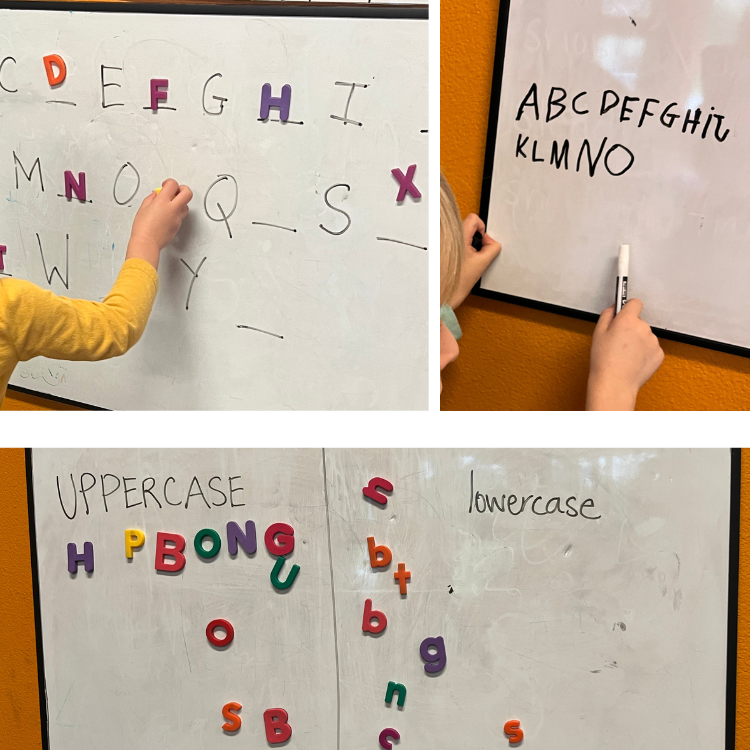
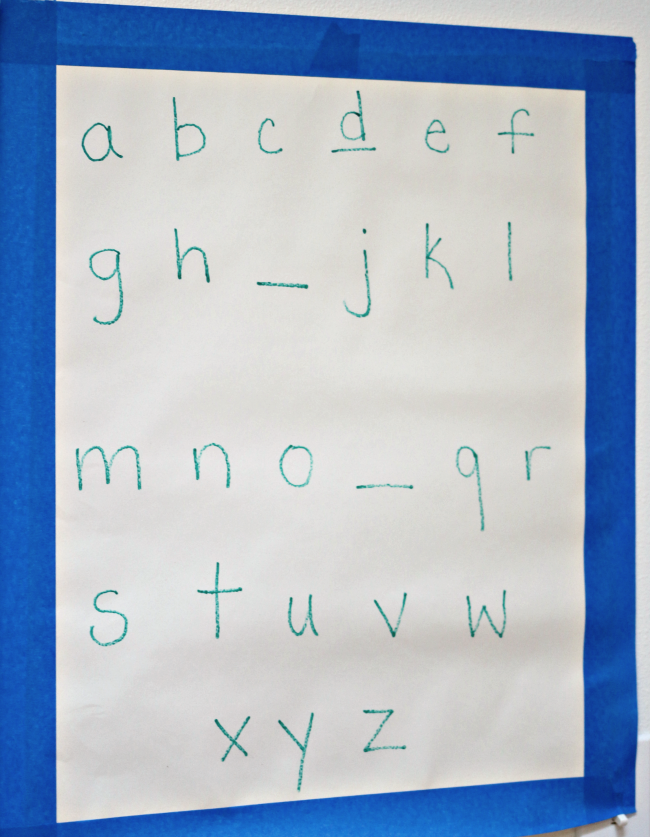
Fill in the blanks with the alphabet and magnetic letters. After playing Missing Letter as a group, I will pull out this independent version. To keep it simple, include only a few missing letters and only those magnets to choose from. Harder? Make more missing letters and have all the letters out to sort through.
Simply giving your students the chance to write whatever they want on the board is so important. I didn’t ask this student to write the alphabet; he just wanted to!
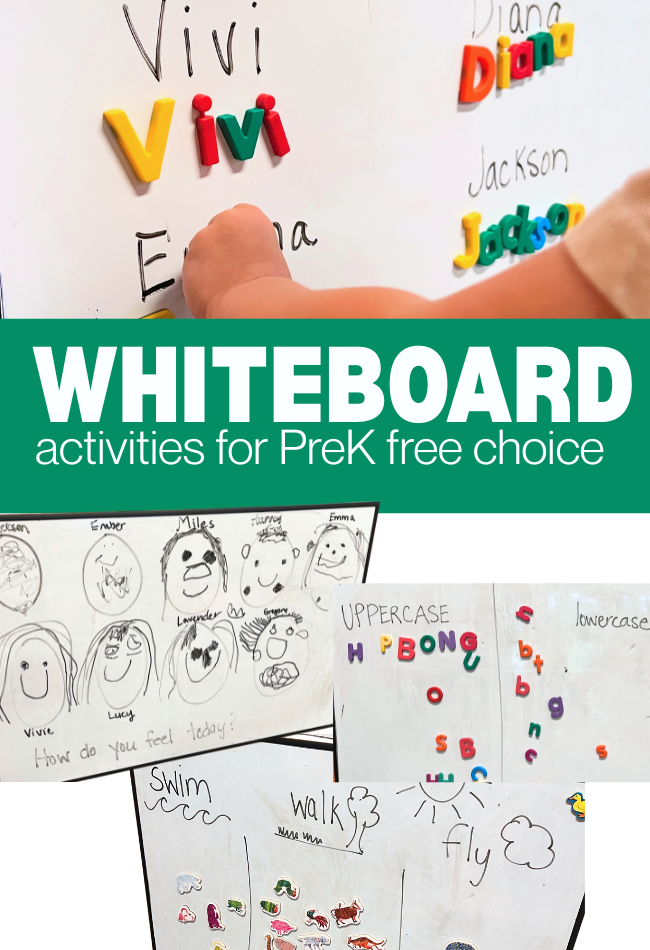
Upper and lowercase letter sorting!
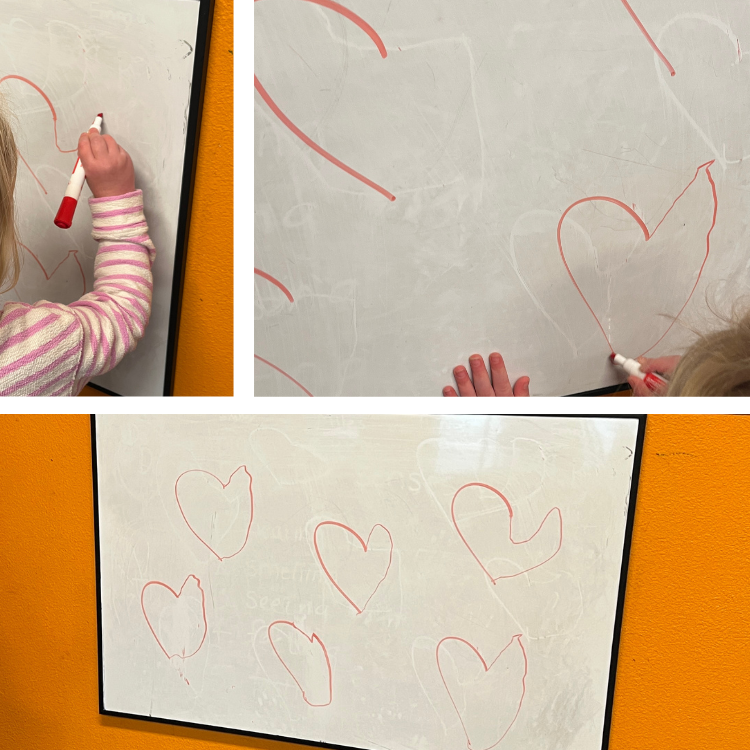
Finishing shapes! I will draw the half of various shapes; this day it was all hearts because it was close to Valentine’s Day, and my students can come complete them!
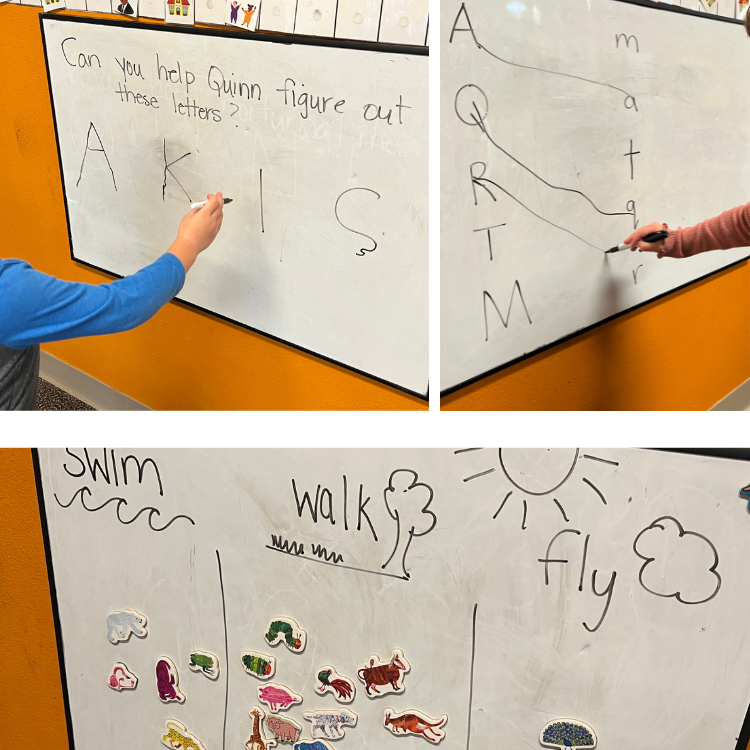
Like finishing the shapes, the top left activity is completing a letter from only part of it. This is not an activity I use a lot, especially at the start of the year, but what is great about whiteboard activities is that they are the easiest to set up and adjust or differentiate for your learners. This little student was eager for a challenge, and this quick letter activity fit the bill.
Matching up upper and lowercase letters! So easy, and I use this for assessment in small, digestible segments. I don’t want my students to know I am assessing them; we’re just doing a quick little activity… which helps me to know where they are at!
Science at the whiteboard too!
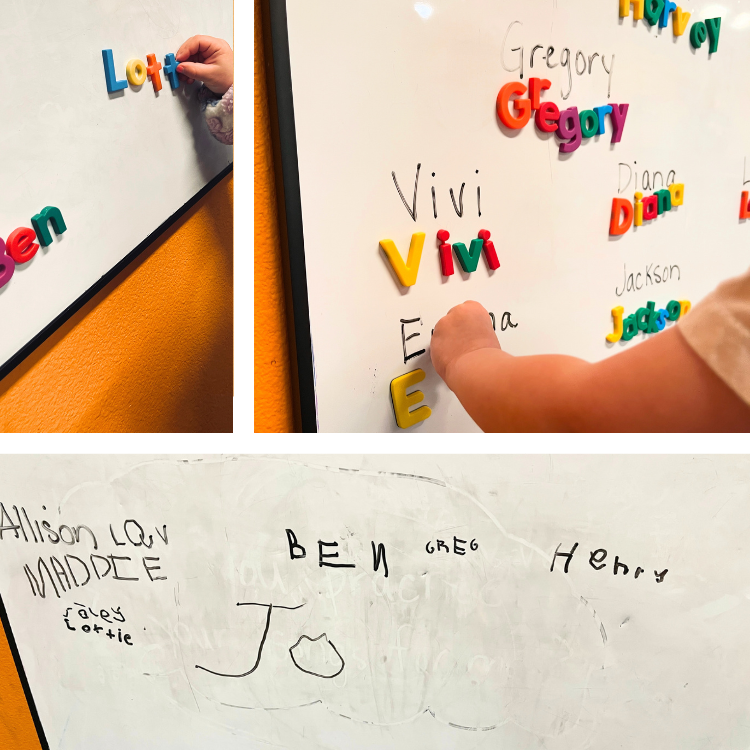
More literacy activities for the whiteboard! These name activities are fun. Sometimes I have magnets out for them to create their names; sometimes they need to re-create their names to match the name I wrote, and my favorite is when I use the whiteboard as a sign-in sheet!
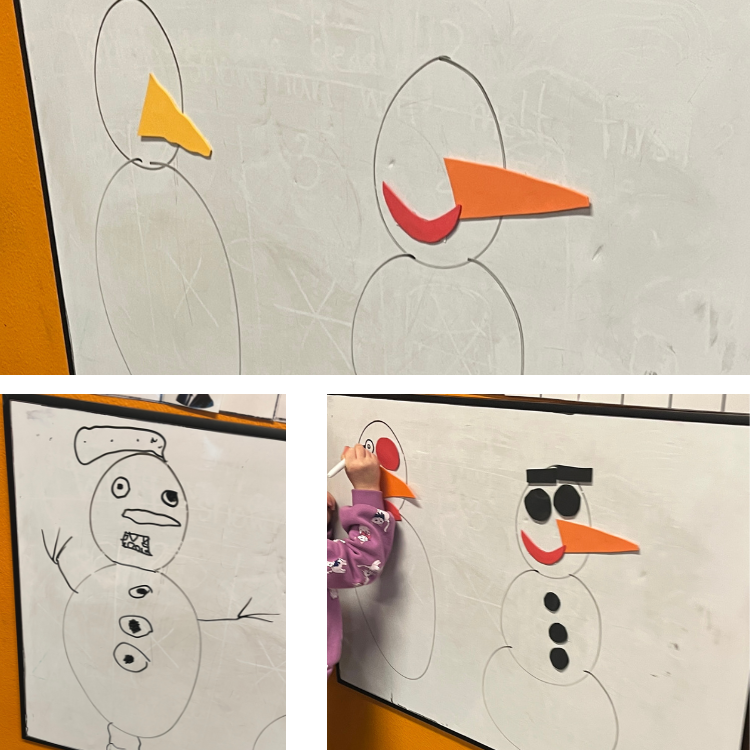
Using themes, like snowmen, is a fun way to encourage drawing and creating during free choice. For these snowmen, I use some magnets, but the students can choose to make a snowman with magnets or markers… or both!
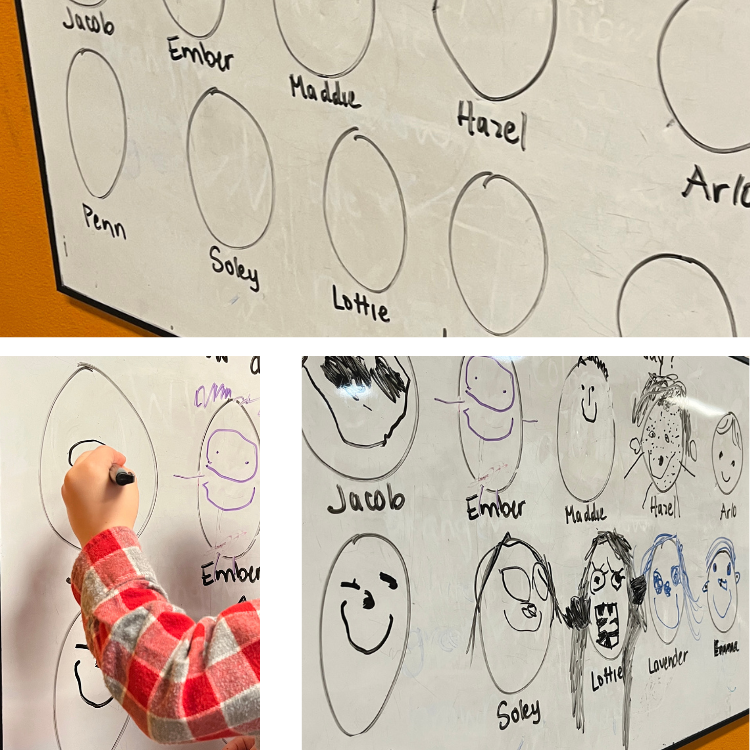
Last but not least, we use the whiteboard to draw how we feel. I love this one; I make the heads and the kiddos fill them in with emotion self-portraits.
How do you use whiteboards in your classroom?

Everyday Preschool In The Classroom by Allison McDonald
This book is a must-have for preschool, prep, and pre-K teachers. It has over 150 effective, everyday hands-on learning activities you can do using materials you already have in your classroom. Allison walks preschool teachers through more than just the instructions for every activity; she also explains the educational benefits. With this resource, you can meet your students where they are and make your preschool classroom a place filled with fun and just the right learning for every student.

Everyday Preschool In The Classroom teaches you how to:
* make the most of simple everyday activities
* adapt activities for different ability levels
* use the same materials for multiple activities
* make learning engaging and fun for every student
* links to free printables, trusted resources, and an online library full of ideas!
What is included in the book?
* literacy activities to help preschoolers build strong early literacy skills
* math activities that stretch beyond counting and number recognition
* science and engineering activities that spark curiosity and problem-solving
* art activities focused on the process of making art and exploring colors
* sensory play that integrates into any preschool or pre-k curriculum
* fine and gross motor activities that can be done in any classroom
* social emotional learning to support preschool students’ development beyond academics.
Leave a Comment